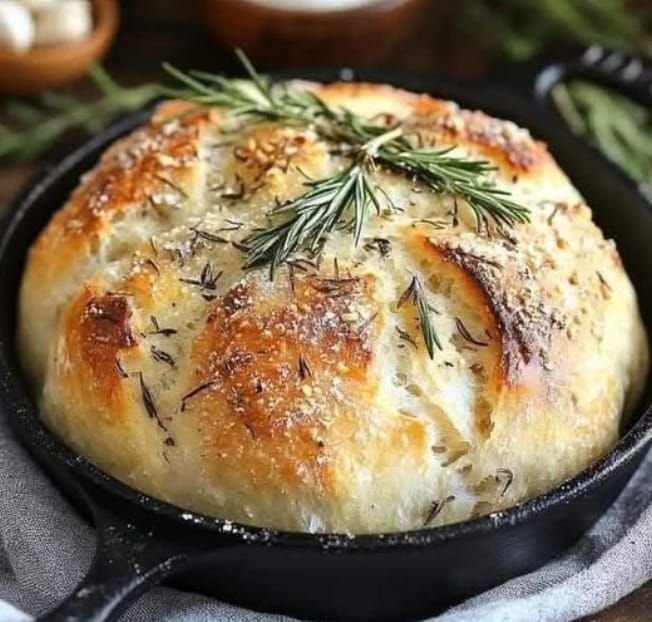
Rustic No Knead Rosemary Garlic Bread Mediterranean Style
This recipe is all about bringing the cozy and warm feeling of a traditional Mediterranean bakery right into your very own kitchen without any of the hard work usually needed for bread. Most people think that making a loaf of bread requires hours of heavy mixing and pushing dough around with your hands but this specific method is famous for being incredibly easy and simple. You are essentially letting time do all the heavy lifting for you because the slow fermentation process builds the structure of the bread while you are sleeping or going about your busy day. The addition of fresh rosemary and toasted garlic creates a smell that will fill your entire house and make everyone feel hungry and excited for dinner long before the oven timer goes off. It is a rustic style loaf which means it looks beautiful and uneven with a very crunchy crust on the outside while the inside remains soft and airy with big bubbles. Even if you have never touched flour in your life this recipe is designed to be successful because it relies on basic science rather than professional baking skills or expensive kitchen gadgets.
People absolutely love this bread because it feels like a high quality artisan product that you would normally pay a lot of money for at a specialty food market or a fancy restaurant. There is a deep sense of pride that comes with pulling a steaming hot loaf of bread out of your own oven and hearing that crackling sound as the crust cools down on the counter. The combination of rosemary and garlic is a classic pairing that reminds people of sunny vacations in Italy or Greece where simple ingredients are used to create massive amounts of flavor. Since there is no kneading involved it is also very popular with people who have busy schedules or those who might find traditional bread making too physically demanding for their hands or wrists. It is a very forgiving recipe which means that even if your measurements are not perfectly exact the bread will still come out tasting delicious and looking like a piece of art. Many home cooks find that once they try this no knead method they never go back to buying store bought bread because the homemade version has so much more character and soul.
You should make this bread whenever you want to add a touch of love and comfort to a family meal or when you are feeling like you need a creative escape from the stress of daily life. From an emotional perspective there is something very grounding and peaceful about mixing water and flour and salt then watching it transform into a living dough that grows over time. It is the perfect choice for a slow Sunday morning when you can prep the dough in five minutes and then let it sit while you enjoy your coffee and a good book. If you are focused on fitness and health you will appreciate that this bread has no preservatives or hidden sugars or strange chemicals that are often found in the plastic bags of bread at the supermarket. It provides a good source of energy from complex carbohydrates and the garlic provides natural health benefits that support your immune system during the colder months of the year. Making your own bread allows you to control exactly what goes into your body while also giving you a huge psychological boost because you are creating something useful and beautiful from scratch.
The taste of this Mediterranean style bread is truly special because the long rest period allows the wheat flavors to fully develop and become slightly sweet and nutty. When the garlic bits roast inside the hot dough they become soft and buttery while the rosemary releases its natural oils to infuse every single bite with a piney and herbal aroma. This bread is the ultimate companion for a big bowl of pasta with red sauce or a hot plate of soup because the crust is strong enough to scoop up juices without falling apart. It also makes for the best toast you will ever eat in your life especially when you spread a little bit of salty butter or a drizzle of extra virgin olive oil over the top while it is still warm. Sharing a loaf of this bread with friends or neighbors is a wonderful way to show kindness and build a sense of community because almost everyone finds the smell of fresh bread irresistible. Whether you are making it for a holiday party or just a quiet night at home this rustic rosemary garlic bread will quickly become a legendary part of your cooking routine.
Ingredients You Will Need
-
3 cups all purpose flour or bread flour
-
1 and a half cups warm water
-
1 teaspoon active dry yeast
-
1 and a half teaspoons sea salt
-
2 tablespoons fresh rosemary finely chopped
-
4 cloves garlic minced or very thinly sliced
-
2 tablespoons extra virgin olive oil for the bowl
-
1 tablespoon cornmeal for the bottom of the pot
Step by Step Method
The first step in making your rustic bread is to find a large glass bowl where the dough can grow and expand without any trouble. Pour your three cups of flour into the bowl and then add the sea salt and the active dry yeast and the chopped rosemary and the minced garlic. Use a large spoon or even your clean hands to stir all these dry ingredients together until the herbs and garlic are spread out evenly through the white flour. Now you will pour in the one and a half cups of warm water making sure the water is not too hot because high heat can kill the tiny yeast organisms that make the bread rise. Stir everything together until a shaggy and sticky ball of dough starts to form and there are no more dry spots of flour left at the bottom of the bowl. This should only take you about a minute or two because we are not trying to make it smooth or perfect at this stage.
Once your dough is mixed you need to cover the bowl tightly with plastic wrap or a very clean kitchen towel so that the air does not dry out the surface of the dough. Place the bowl in a warm and draft free spot in your kitchen and let it sit there undisturbed for at least twelve hours though eighteen hours is even better for the flavor. During this long rest time the yeast will eat the sugars in the flour and create gas bubbles which is what makes the dough double or even triple in size. You will know it is ready when the surface of the dough looks dotted with little bubbles and it smells slightly tangy like a mild sourdough. This slow process replaces the need for kneading because the gluten strands are forming all by themselves as the dough sits quietly on your counter. It is a bit like magic to see how a sticky mess turns into a structured dough without you doing any of the hard physical work.
When the long wait is over you should preheat your oven to 450 degrees Fahrenheit and place a heavy Dutch oven or a large pot with a lid inside the oven while it heats up. Heating the pot is a very important secret because the hot metal or ceramic will create steam which is what gives the bread that professional crunchy crust. While the oven is getting hot turn your dough out onto a surface that has been lightly covered with flour so it does not stick to your table. Gently fold the dough over itself just a couple of times to form a round shape but try not to pop too many of those precious air bubbles. Let the dough rest on a piece of parchment paper for about thirty minutes while the pot finishes getting extremely hot inside the oven. You can sprinkle a little bit of extra rosemary or a tiny bit of salt on top of the loaf right now to make it look even more beautiful.
Carefully remove the very hot pot from the oven using thick oven mitts and lift the dough by the edges of the parchment paper to drop it inside the pot. Put the lid back on the pot and slide it into the oven to bake for thirty minutes with the cover on to trap the steam inside. After thirty minutes have passed remove the lid and you will see that the bread has risen and looks pale gold in color. Continue to bake the bread without the lid for another fifteen to twenty minutes until the crust is a deep dark brown and it sounds hollow when you tap it with your finger. Take the bread out of the pot and let it cool on a wire rack for at least one hour before you try to slice it. Waiting for it to cool is very hard because it smells so good but the bread is actually still finishing its cooking process on the inside as it rests.
Why This Recipe Is Special
This recipe is special because it celebrates the beauty of simplicity and the power of patience in a world that usually wants everything to happen instantly. By using only four or five basic ingredients you are creating a food that is pure and honest and free from the additives that big companies use to keep bread soft for weeks. The Mediterranean influence of garlic and rosemary adds a layer of health benefits as garlic is known to help lower blood pressure and rosemary is full of anti inflammatory compounds. Since the dough undergoes a long fermentation it is often easier for people with sensitive stomachs to digest compared to bread that is made very quickly with lots of extra yeast. The texture is another reason why this loaf stands out because the high heat of the Dutch oven creates a glass like crust that shatters when you bite into it while the inside stays moist. It is a sensory experience that involves the sight of the golden loaf and the sound of the crunch and the incredible smell of the herbs.
Extra Tips for Better Taste
If you want to make the crust even more flavorful you can brush the top of the dough with a little bit of melted butter or garlic oil right before it goes into the oven. You can also try adding different types of Mediterranean ingredients like chopped kalamata olives or sun dried tomatoes into the dough during the initial mixing phase. For an even more rustic look you can use a sharp knife to cut a shallow cross or a leaf pattern into the top of the dough just before baking. If you do not have a Dutch oven you can use a regular baking sheet and place a pan of water on the bottom rack of the oven to create the steam needed for a good crust. Another great trick is to use bread flour instead of all purpose flour if you want a chewier texture because bread flour has more protein which builds stronger gluten. Always make sure your yeast is fresh by checking the expiration date because old yeast will not have the strength to lift the heavy dough during the long rest.
Final Thoughts
Making your own Rustic No Knead Rosemary Garlic Bread is a journey that starts with a few simple ingredients and ends with a masterpiece that you can be proud to serve. It teaches us that good things take time and that you do not need to be an expert to create something truly delicious and nourishing for your friends and family. This bread is more than just a side dish because it carries the warmth of your kitchen and the care you put into letting it grow and bake to perfection. I hope that this recipe brings a little bit of Mediterranean sunshine into your home and that you enjoy the wonderful process of becoming a home baker. There is nothing quite like the first slice of warm bread with a little bit of oil and salt to make life feel a little bit more wonderful.
Nutrition Details
| Item | Amount Per Serving |
| Serving Size | 1 Thick Slice |
| Calories | 165 |
| Total Fat | 3 grams |
| Saturated Fat | 0.5 grams |
| Sodium | 295 milligrams |
| Total Carbohydrates | 30 grams |
| Dietary Fiber | 1.5 grams |
| Sugars | 0.5 grams |
| Protein | 4.5 grams |
| Calcium | 10 milligrams |
| Iron | 2 milligrams |
The nutrition values listed above are based on a loaf cut into approximately twelve equal slices and may change if you use different types of flour or add extra oil. This bread is naturally vegan and contains no cholesterol which makes it a heart healthy choice for most people looking for a clean source of grains.
Disclaimer
Please keep in mind that every person has a different body and different nutritional needs so you should always listen to your own health experts. The information provided in this article is for educational and cooking purposes and is not intended to be medical advice or a strict diet plan. Results in baking can vary based on your local humidity and the temperature of your kitchen as well as the specific brand of oven you use. If you have allergies to gluten or specific herbs please make sure to adjust the recipe or choose ingredients that are safe for your specific situation.
Would you like me to help you come up with a list of soups or dips that would pair perfectly with this rosemary garlic bread?