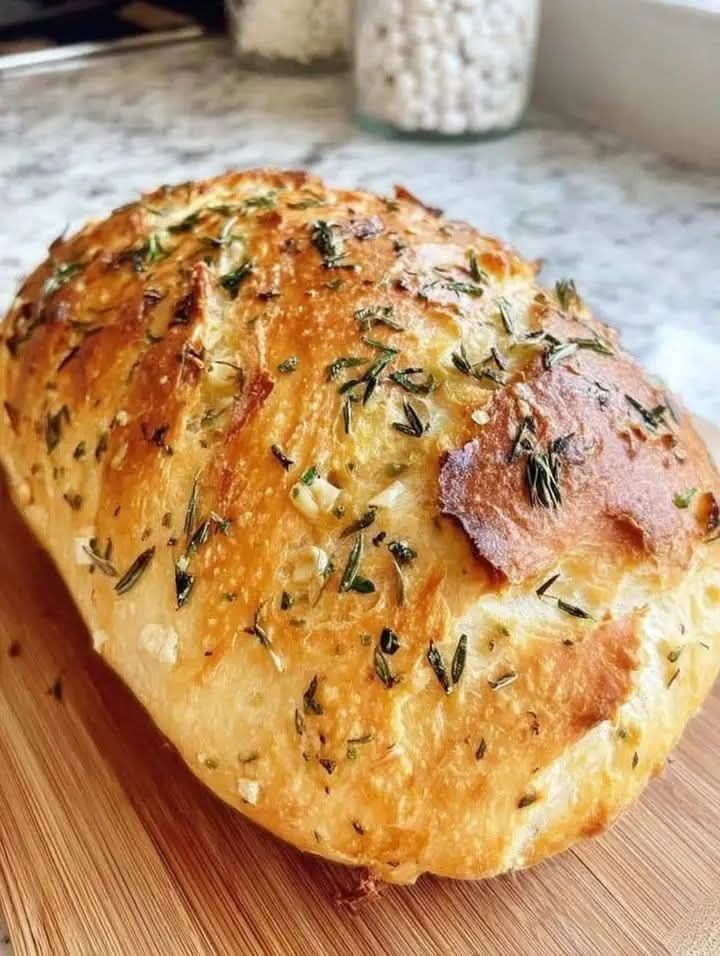
Garlic No Knead Bread: The Ultimate Guide for Beginners
Making bread at home used to feel like a very scary task for many people because of the hard work involved. Traditional bread recipes often ask you to spend a lot of time pushing and pulling the dough with your hands which is called kneading. This process can be very tiring for your arms and it also takes a lot of patience to get the texture just right. However this garlic no knead bread recipe changes everything because it removes the hardest part of the process while still giving you a professional result. Imagine waking up to the smell of fresh herbs and toasted garlic filling every corner of your home without having to sweat over a floured counter for an hour. This recipe is designed for the modern person who wants the high quality taste of a bakery but does not have the extra time or physical energy to do things the old fashioned way. It is truly a magic trick in the kitchen because it uses time instead of physical labor to develop the gluten and create a perfect crumb.
People absolutely love this recipe because it is incredibly forgiving and almost impossible to mess up even if you are a total beginner. Most individuals are drawn to the simplicity of mixing just a few basic ingredients in a large bowl and letting nature do the rest of the work. There is a special kind of joy that comes from seeing a wet shaggy mess of dough transform into a beautiful golden loaf with a crispy crust. The addition of garlic takes the flavor profile to a whole new level of deliciousness that makes it stand out from plain white bread. It is the kind of recipe that makes you feel like a master chef even if you have never baked anything more complex than a tray of cookies before. Since you do not need any special equipment like a stand mixer or expensive bread machines it is very accessible for college students or people living in small apartments. The low effort versus high reward ratio is exactly why this specific bread has become a viral sensation among food lovers around the entire world lately.
You should make this garlic bread whenever you feel the need for some serious comfort food that warms your soul and fills your belly. It is the perfect companion for a thick bowl of tomato soup on a rainy afternoon or a side dish for a big family pasta dinner on a Sunday night. Beyond just the taste there is a strong emotional component to baking your own bread because it connects you to a long history of human tradition. From a fitness and health perspective making your bread at home is much better because you control every single ingredient that goes into your body. You can avoid all the weird preservatives and high amounts of sugar found in store bought loaves which makes it a cleaner choice for your lifestyle. Whether you are celebrating a small win at work or just want to show your friends some love at a dinner party this bread is the answer. The aromatic scent of roasted garlic combined with the soft airy middle of the loaf creates an experience that truly nourishes both the heart and the physical body.
There is something deeply satisfying about the slow pace of this recipe that helps reduce stress in a very busy world. While the dough sits on your counter for many hours it teaches you the value of waiting for good things to happen naturally. You do not have to rush or worry about overworking the dough because the yeast does all the heavy lifting while you sleep or work. This makes it an ideal project for a lazy weekend when you want to be productive without being overly active or stressed out. The crust becomes thin and crackly while the inside stays moist and chewy which is a texture combination that most people find completely irresistible. When you pull that hot pot out of the oven and see the steam rising from the golden surface you will feel a massive sense of pride. It is not just about eating a slice of bread but about the entire journey from simple flour to a culinary masterpiece. This recipe is a celebration of simple living and high quality flavors that anyone can master with just a little bit of time and a lot of love.
Ingredients You Will Need
To make this delicious bread you will need to gather these simple items from your pantry or local grocery store.
-
3 cups of All Purpose Flour or Bread Flour (375 grams)
-
1 and a half cups of Warm Water (355 milliliters)
-
1 teaspoon of Active Dry Yeast or Instant Yeast (4 grams)
-
1 and a half teaspoons of Sea Salt (9 grams)
-
3 cloves of Fresh Garlic finely minced
-
2 tablespoons of Salted Butter melted for the topping
-
1 tablespoon of Fresh Parsley chopped very small
-
1 tablespoon of Olive Oil to coat the bowl
Step by Step Method
Step 1: Mix the Dry Ingredients
Find a large glass or ceramic bowl that has plenty of room for the dough to grow. Pour your flour into the bowl along with the salt and the yeast. Use a large spoon or a spatula to stir these dry ingredients together until they are perfectly combined. You want the yeast and salt to be spread out evenly through the flour so the bread rises well.
Step 2: Add the Water and Garlic
Pour the warm water into the bowl along with your finely minced garlic. Stir the mixture gently until all the flour is wet and no dry spots remain at the bottom of the bowl. The dough will look very messy and sticky at this stage but do not worry because that is exactly how it should look. Do not try to knead it or make it smooth because the moisture is what does the work here.
Step 3: The Long Rest
Cover the bowl tightly with plastic wrap or a clean damp kitchen towel. Place the bowl in a warm spot in your kitchen where it will not be disturbed. Let the dough sit for at least 12 hours though 18 hours is even better for the best flavor. During this time the yeast will eat the sugars in the flour and create tiny air bubbles which makes the bread light and airy.
Step 4: Shape the Dough
After the long rest the dough should have doubled in size and look bubbly on top. Sprinkle a little bit of flour on a flat surface and gently tip the dough out of the bowl. Fold the edges of the dough toward the center a few times to form a rough ball shape. You do not need to press hard because you want to keep those lovely air bubbles inside.
Step 5: Second Rise
Place the shaped dough onto a piece of parchment paper. Cover it again with a towel and let it rest for another 30 to 60 minutes. While the dough is resting place a heavy pot with a lid like a Dutch oven into your oven. Turn the oven on to 450 degrees Fahrenheit or 230 degrees Celsius so the pot gets very hot.
Step 6: The Baking Process
Carefully remove the hot pot from the oven using thick oven mitts. Lift the dough by the edges of the parchment paper and drop it into the hot pot. Put the lid back on and slide the pot into the oven. Bake with the lid on for 30 minutes. This creates steam which helps the crust become thin and crispy.
Step 7: The Final Browning
After 30 minutes remove the lid from the pot. You will see the bread has risen and looks pale gold. Bake it for another 15 minutes without the lid until the crust is a deep golden brown color. This step is crucial for developing that amazing crunch that everyone loves.
Step 8: Garlic Butter Finish
While the bread is finishing in the oven mix your melted butter with the chopped parsley. As soon as you take the bread out of the oven brush this garlic butter all over the top of the hot loaf. The heat will help the butter soak into the crust. Let the bread cool on a wire rack for at least 20 minutes before slicing so the inside sets properly.
Why This Recipe Is Special
This recipe is special because it uses a scientific process called long fermentation which makes the bread much easier for your stomach to digest. Because the dough sits for so many hours the enzymes have time to break down some of the gluten and starches which is great for people with mild sensitivities. It also creates a much deeper flavor than bread made in just one hour because the yeast has time to produce complex aromas.
Another reason it stands out is the texture contrast that you rarely find in store bought bread. The outside is crunchy and rustic while the inside remains incredibly soft and chewy with large holes like an expensive artisan loaf. You are also avoiding chemicals like dough conditioners and high fructose corn syrup which are often hidden in commercial loaves. It is a pure and honest way to eat that focuses on quality and patience.
Extra Tips for Better Taste
-
Use Roasted Garlic: If you want a sweeter and more mellow flavor try using roasted garlic cloves instead of raw minced garlic.
-
Add Cheese: You can mix half a cup of shredded parmesan cheese into the dough during step two for a savory cheesy boost.
-
Try Different Herbs: Rosemary or thyme work beautifully with garlic if you want a more earthy and floral scent in your bread.
-
The Salt Matters: Using a high quality sea salt or flaky salt will improve the taste of the crust significantly compared to regular table salt.
-
Keep it Hot: Make sure your oven is fully preheated before you put the pot inside because a cold oven will lead to a flat and dense loaf.
Final Thoughts
Making your own garlic no knead bread is a rewarding journey that brings the joy of a professional bakery right into your own kitchen. It is a simple act of self care that results in a delicious treat you can share with the people you love most. Once you taste the difference between a homemade loaf and a plastic wrapped one you will never want to go back. Enjoy the process of watching your simple ingredients transform into something truly magical and filling.
Nutrition Details
This table shows the estimated values for one large loaf of bread.
| Nutrient | Amount Per Serving (1 slice) | Total Per Loaf |
| Calories | 160 | 1600 |
| Total Fat | 3 grams | 30 grams |
| Sodium | 310 milligrams | 3100 milligrams |
| Carbohydrates | 28 grams | 280 grams |
| Fiber | 1 gram | 10 grams |
| Sugars | 0 grams | 0 grams |
| Protein | 4 grams | 40 grams |
Note: Calculations are based on a loaf cut into 10 even slices.
Disclaimer
Please remember that every person has a unique body and different nutritional needs. The results of this recipe and its impact on your health may change based on your individual metabolism or any underlying health conditions you might have. Always talk to a doctor or a professional nutritionist if you have concerns about your diet or specific ingredients. This article is for informational purposes and should not be taken as medical advice.